In Conversation
Yurina Yoshii
Knitwear Designer
On knitwear, cultural identity, and the infinite possibilities of yarn
Interview · Giorgio Fragiacomo
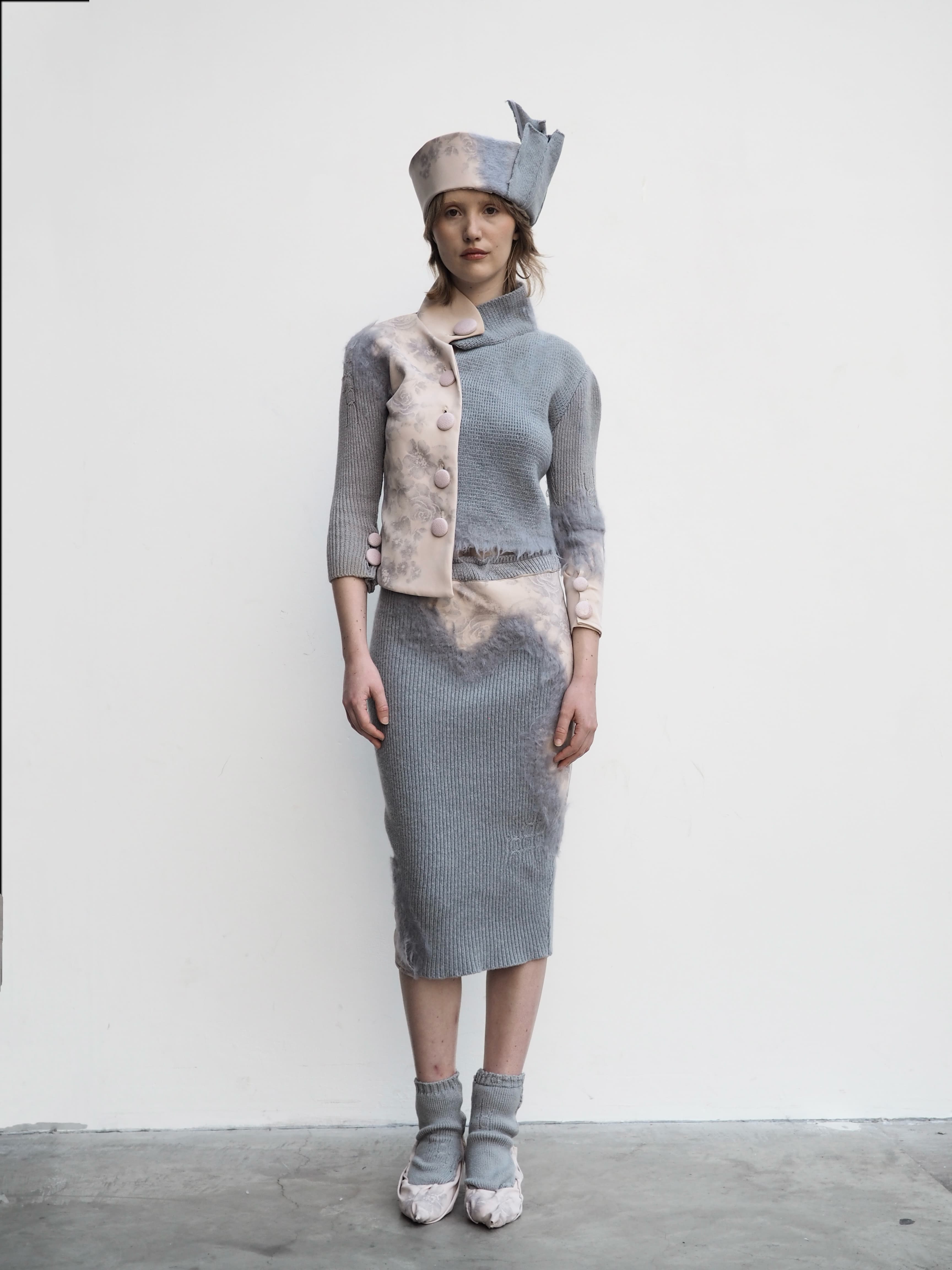
From pigeon feathers on a Tokyo balcony to the spiral motifs of Ainu tradition in Hokkaido, Yurina Yoshii finds inspiration in the details others overlook. Currently studying knitwear at Central Saint Martins, the Tokyo born, London based designer speaks about her creative process, her Japanese heritage, and her ambition to reshape the knitwear industry.
Giorgio Fragiacomo
When you first showed me your work, it was inspired by pigeon feathers, this very close, almost overlooked detail from everyday life. Then more recently, you turned to Ainu traditional patterns, which is a completely different cultural and historical territory. How does your research process work? Do you follow a thread instinctively, or do you set yourself a specific direction before you begin?
Yurina Yoshii
I would say I follow a thread instinctively. I believe that inspiration is everywhere, whether it’s from daily life or historical studies. For example, when I go travelling and I find something very attractive to me, I always try to figure out why it catches my attention. Maybe it’s because of the silhouette, the texture, the pattern, or the colour.
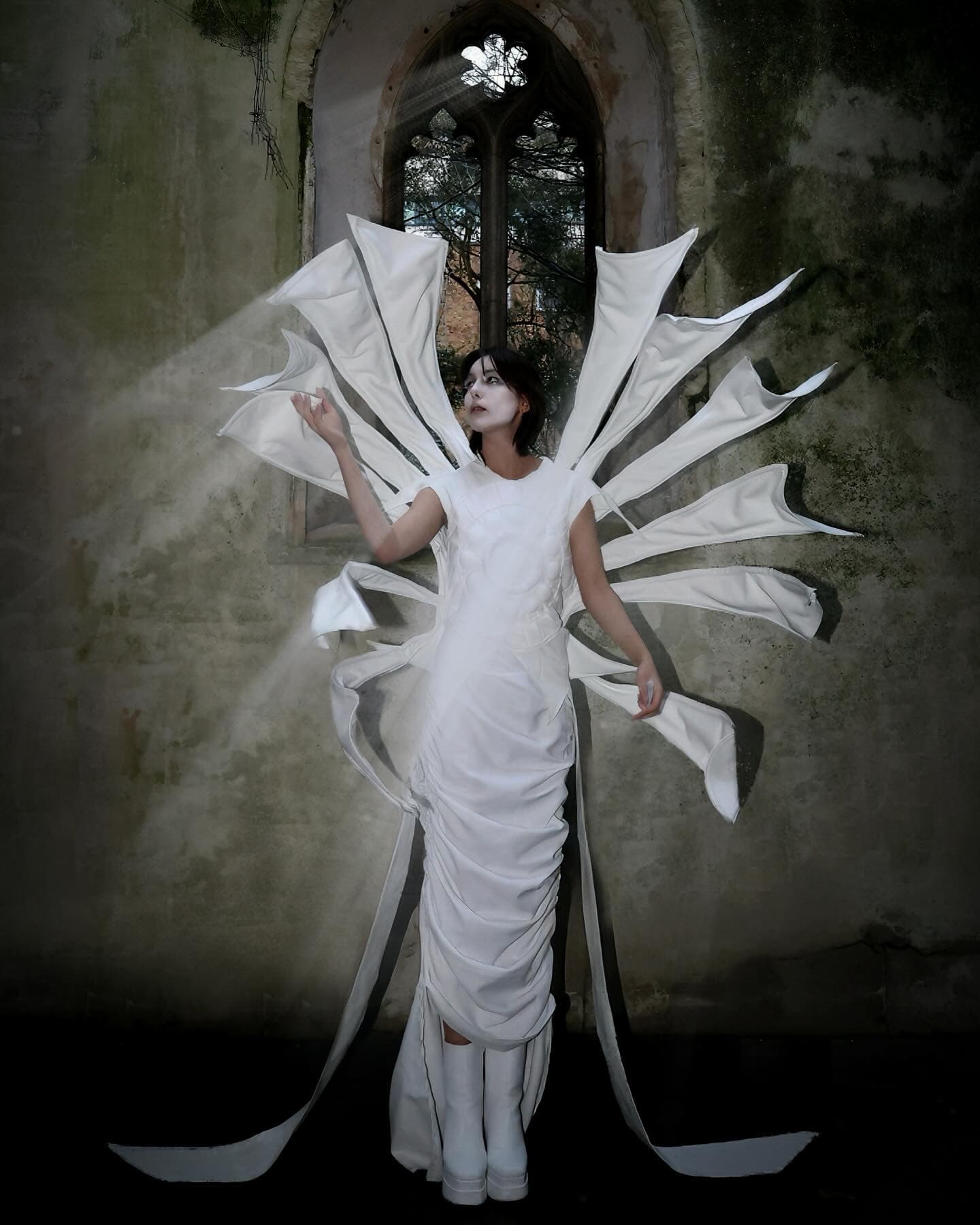
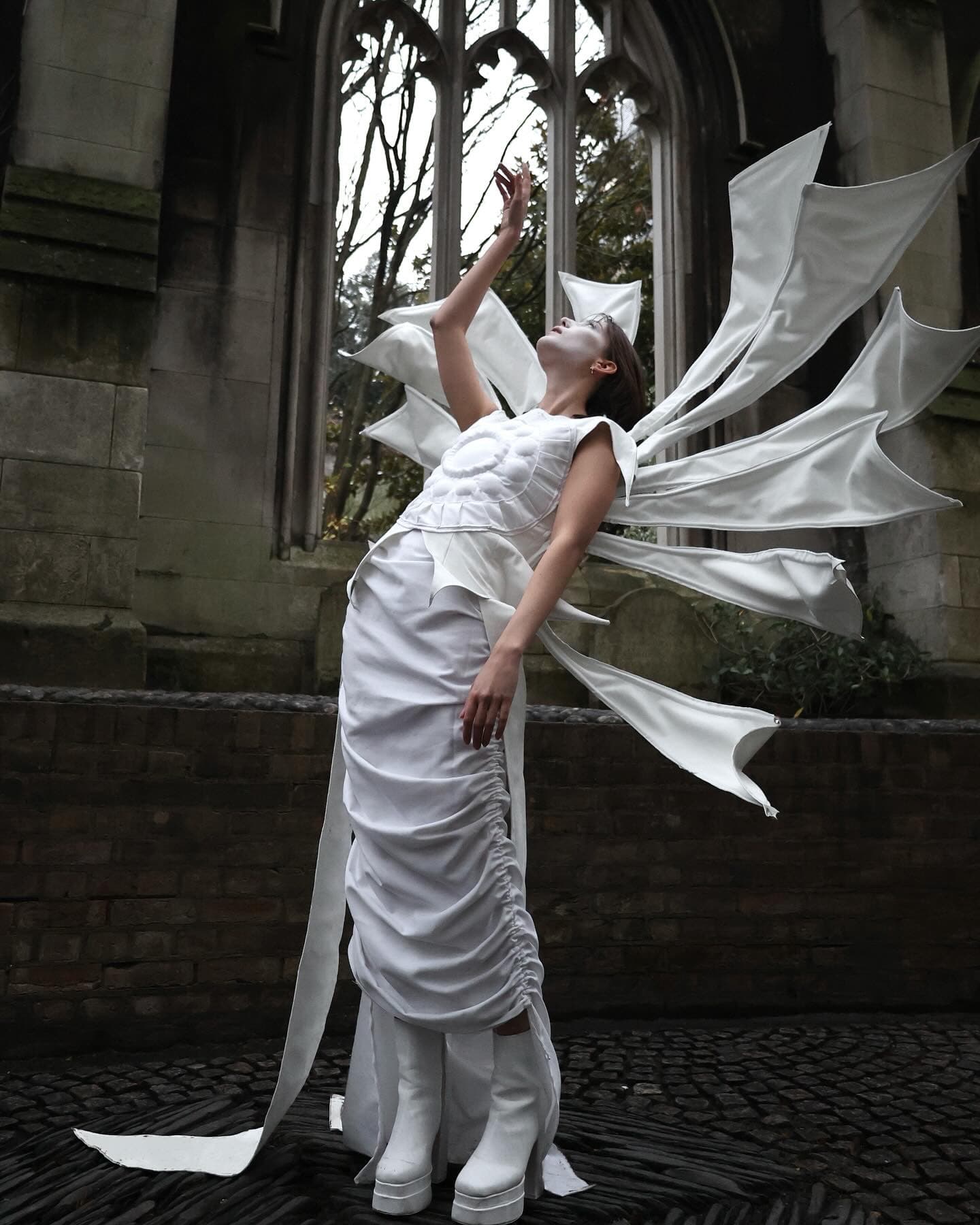
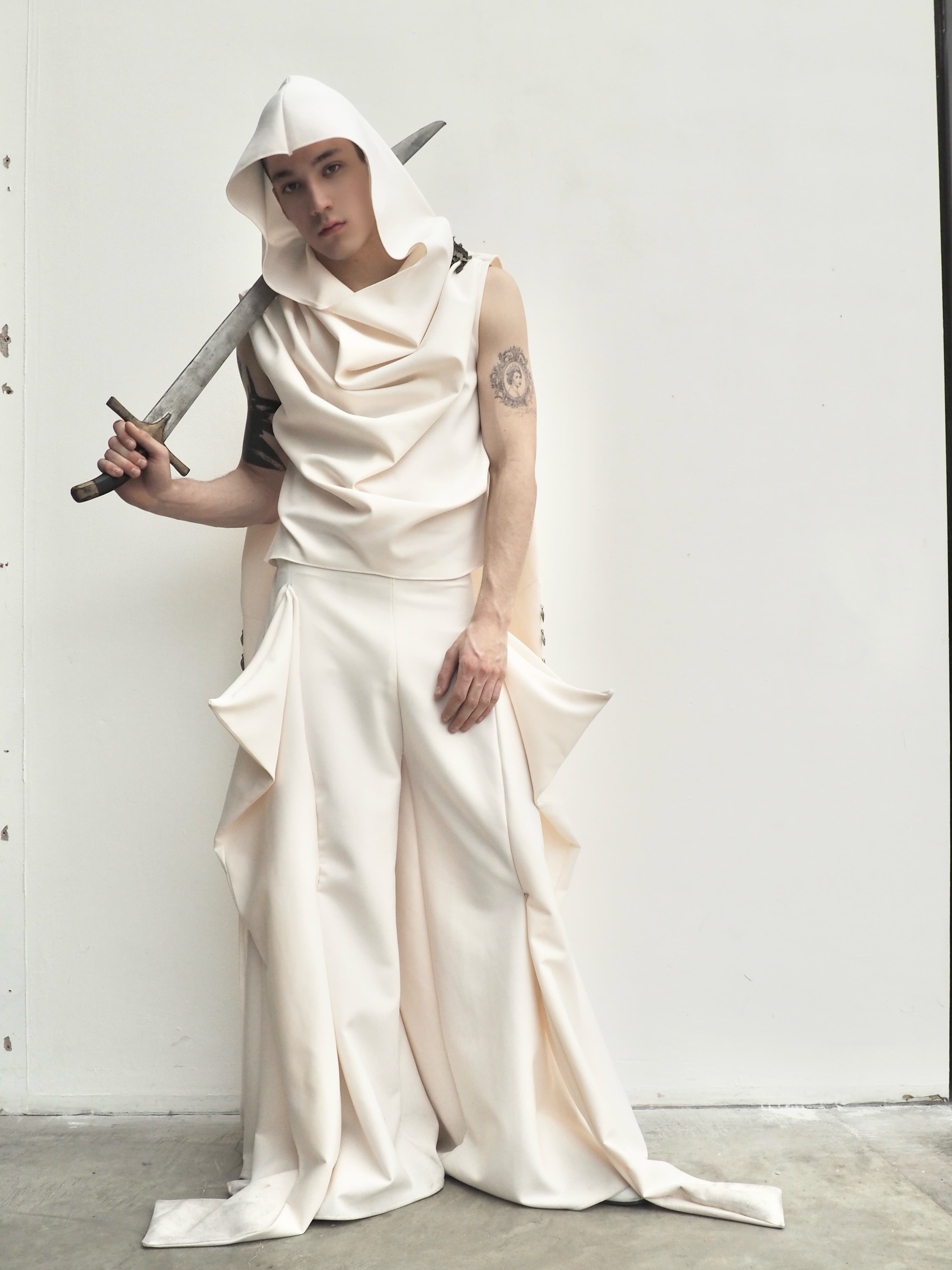
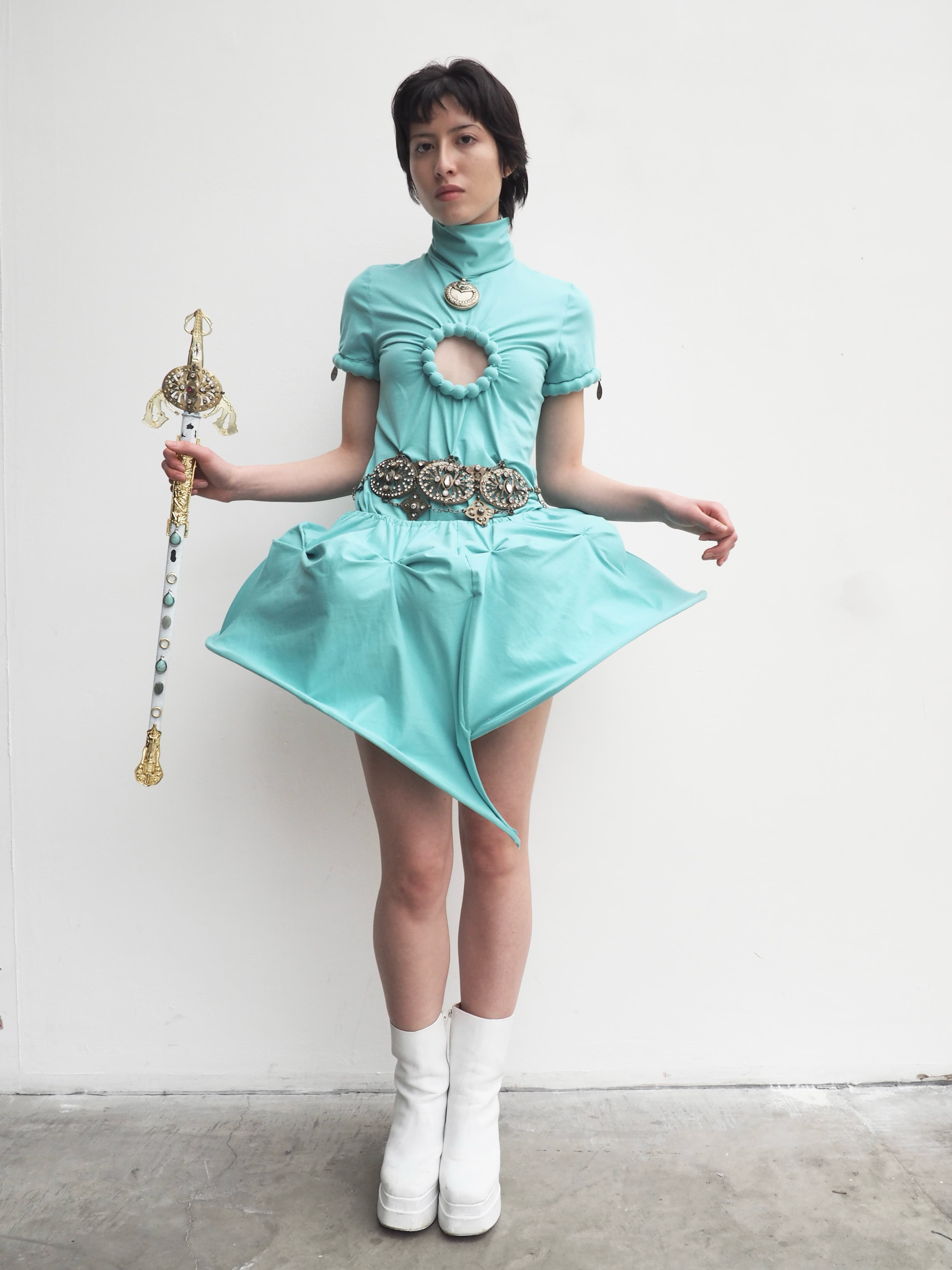
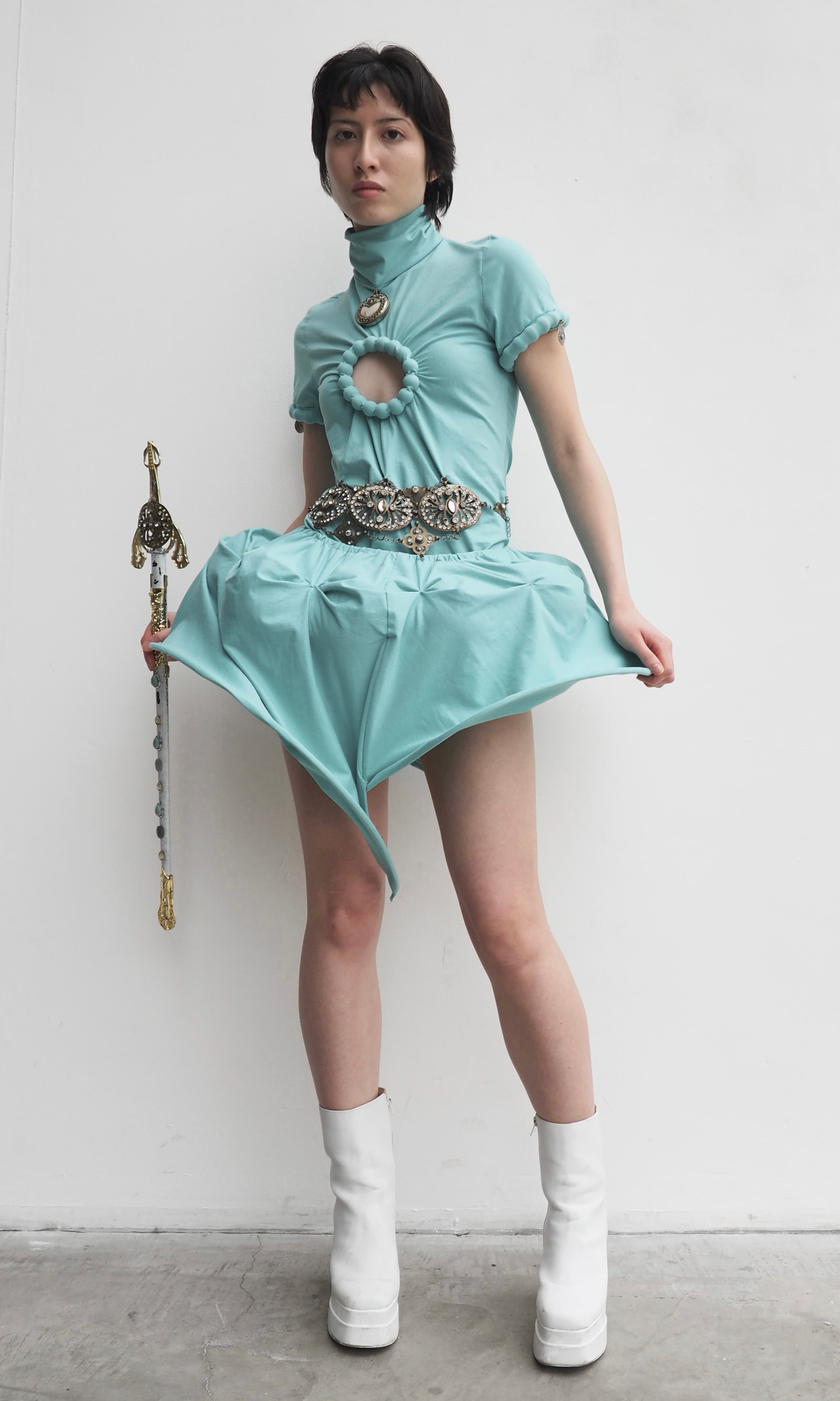
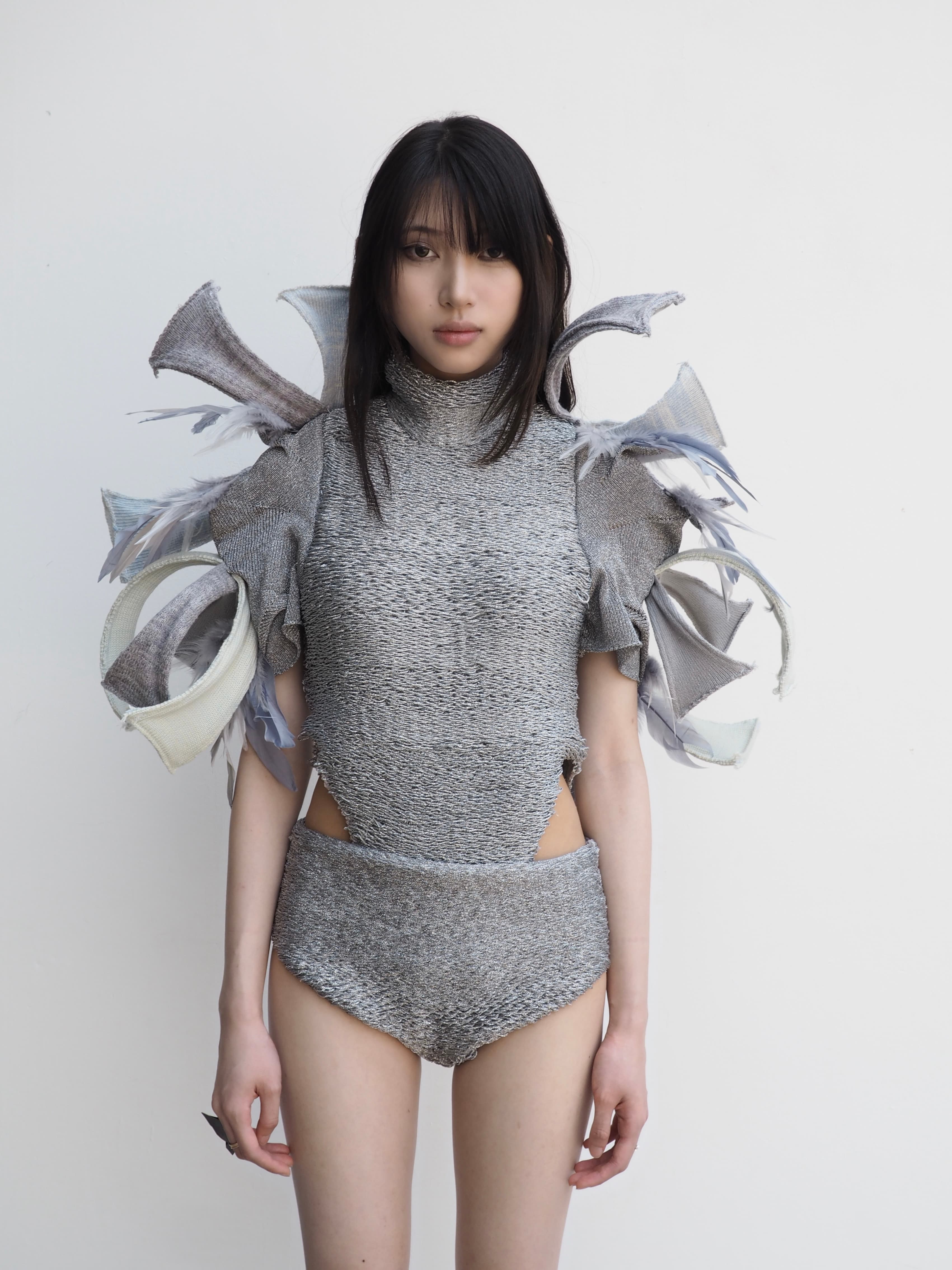
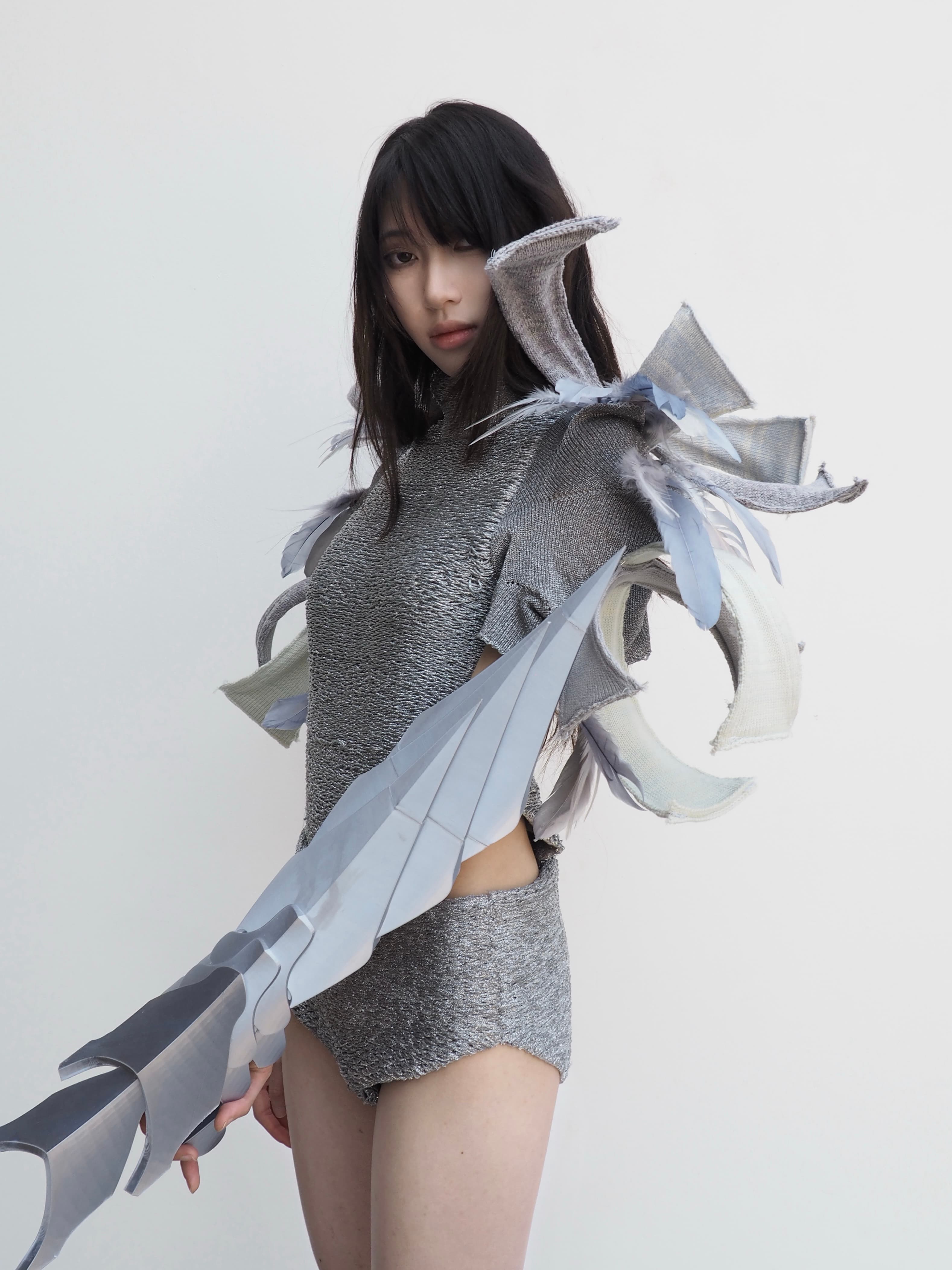
For the Knickers project, I had a little piece of storytelling: my balcony was ruined by pigeons, so I thought I needed a soldier to protect my balcony from them. I was inspired by the pigeon’s feather pattern and combined it with a metallic look from a soldier reference, blending them into the textile in the final outcome.
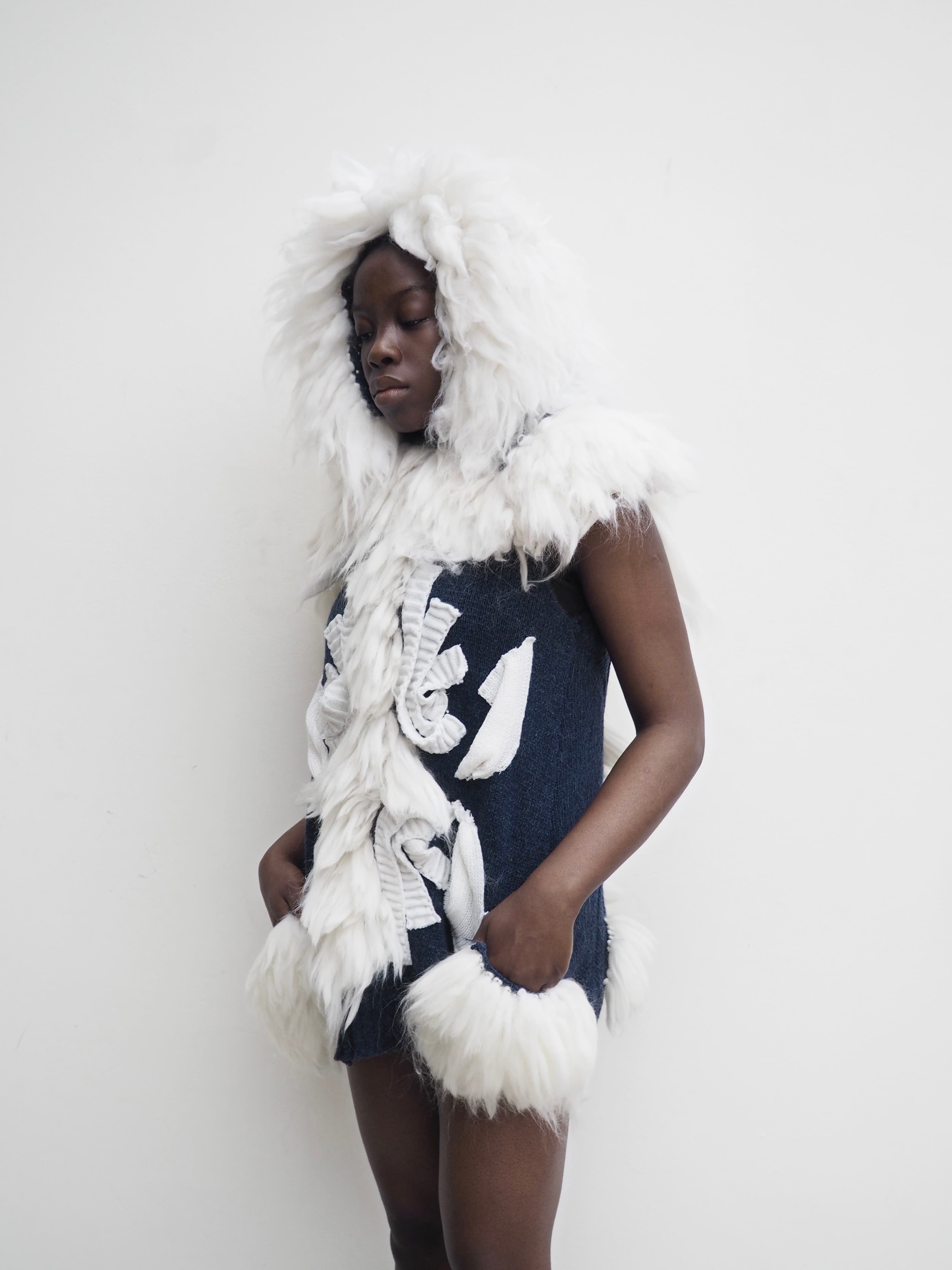
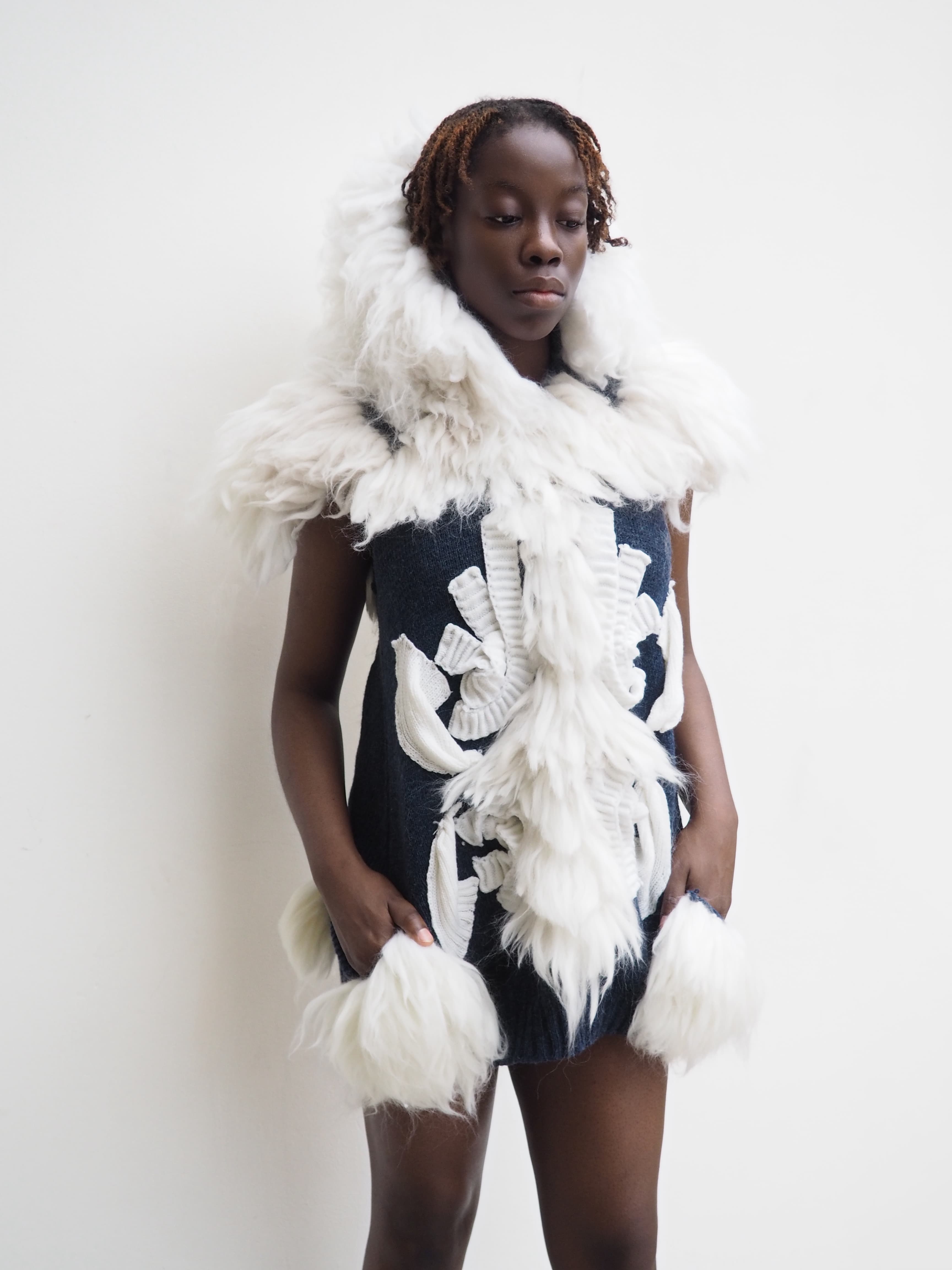
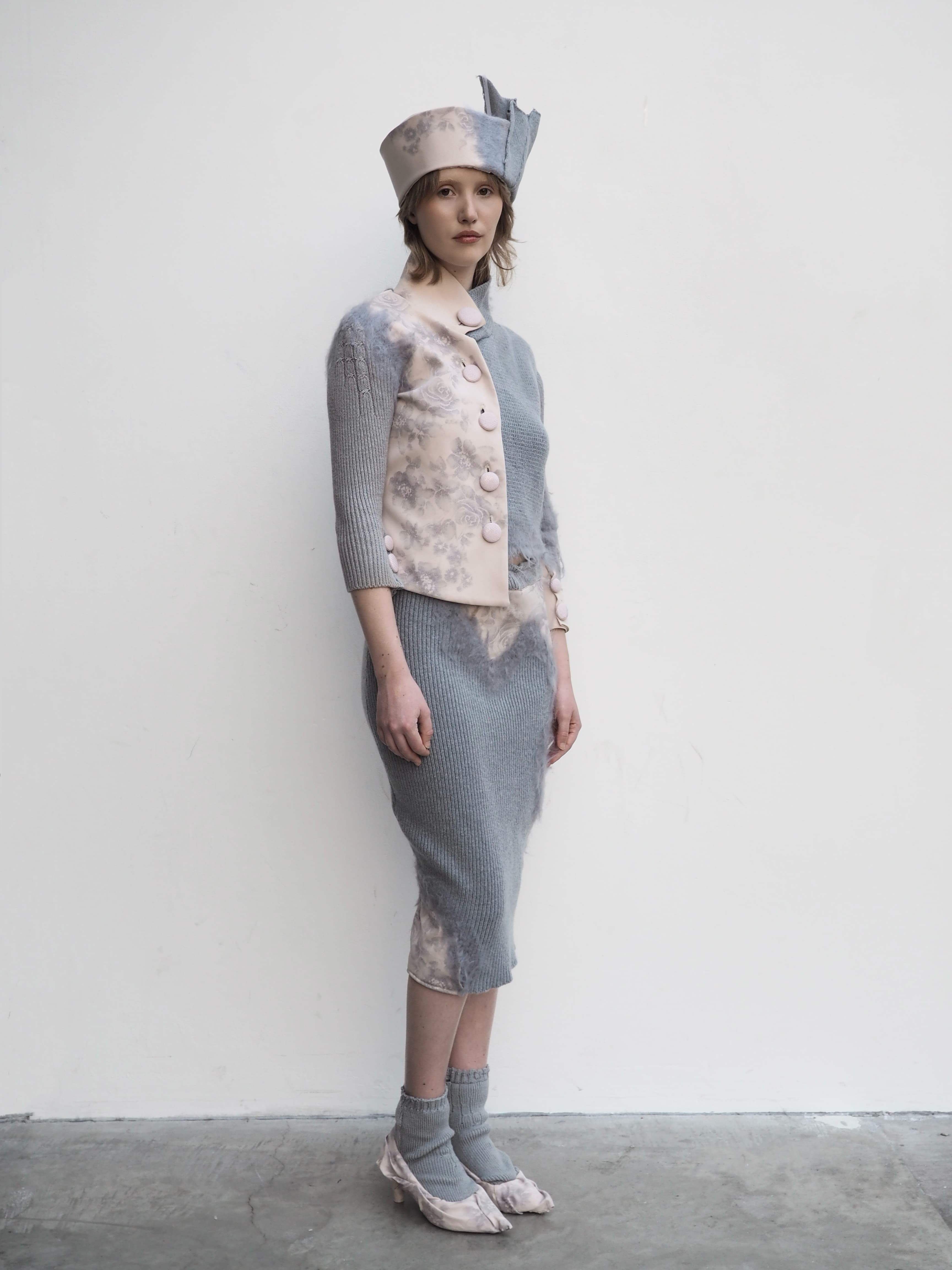
The Wool project was inspired by Ainu culture. I developed a strong interest in the culture, its traditional clothes and its patterns when I randomly visited Hokkaido. I loved the fur jackets they wore in winter for hunting, and I was drawn to the traditional patterns and the meanings behind them, so I used them as references.
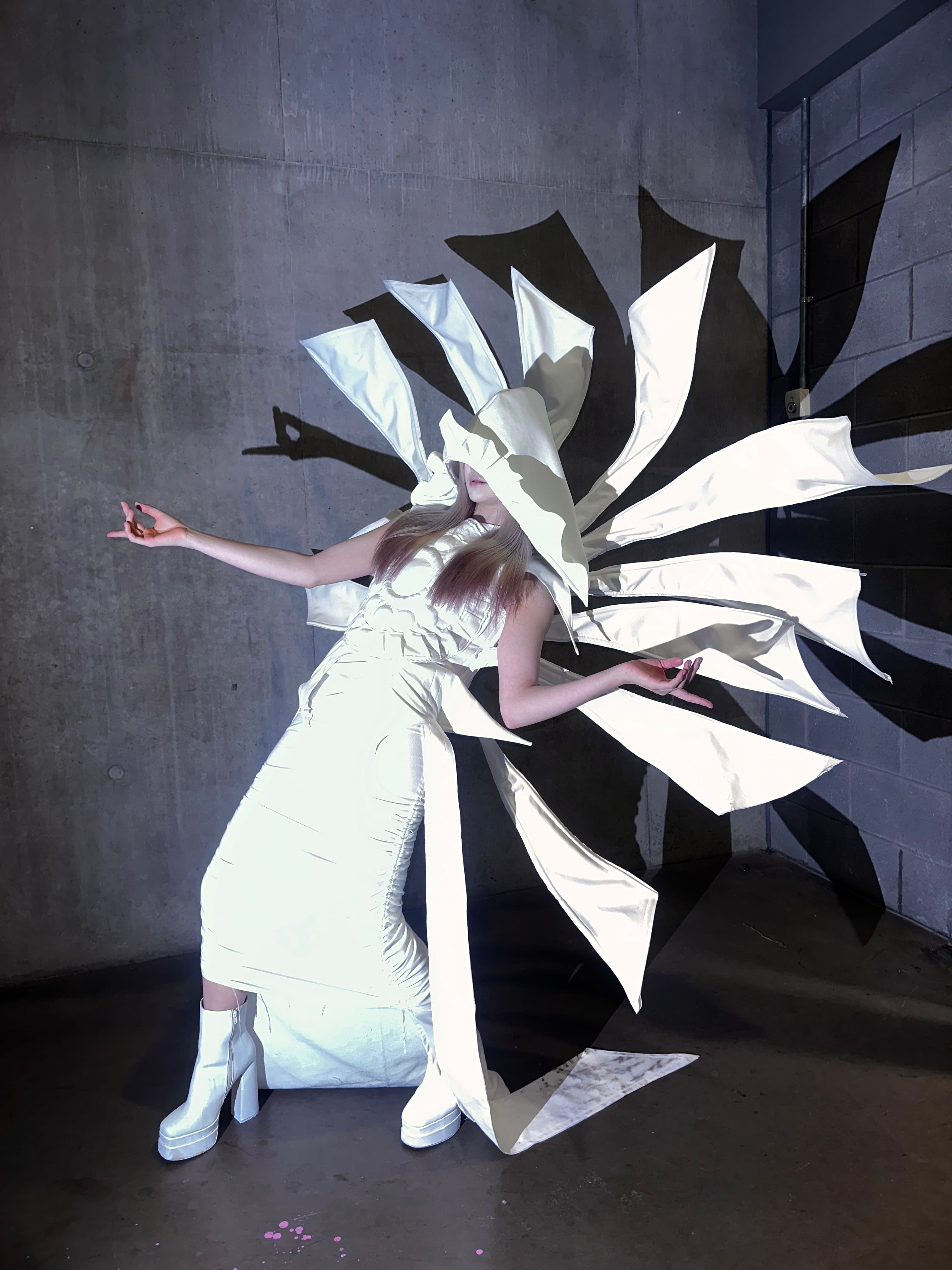
My inspiration isn’t always limited to historical or everyday subjects. Last term, the team project was inspired by the film “I’m Here”, directed by Spike Jonze, which a friend had recommended to me. The Ritual project I worked on this term was about the ornaments used in Japanese New Year celebrations, and the current Florence project was inspired by the textures and textiles I encountered on a school trip to Florence.
I don’t really have a specific genre that inspires me, but I think I always use inspiration to consider what catches my eye, no matter what it is.
Giorgio Fragiacomo
When did you first realise that fashion was what you wanted to pursue, and was there a specific moment that confirmed it, or was it more gradual?
Yurina Yoshii
It was a gradual pursuit of my interest in fashion.
Since I was a child, I’ve loved drawing and crafting. I adored art lessons at elementary school. I was also the kind of girl who was always making rubber bracelets and misanga bracelets and giving them to friends. When I started middle school, I joined an art club and focused on fine arts. I did a lot of painting and drawing. I realised that I wanted to do more art and have more art lessons abroad, so I came to the UK. I attended an international art high school, where I chose fine arts and textiles for GCSE and A Level.
At the beginning, I was more drawn to fine arts than textiles, so I was considering applying to a fine art course at university. However, my interest in textiles grew throughout high school. I really enjoyed making my own fabrics from scratch through knitting, dyeing, weaving, and embroidery. I especially loved knitting because of the moment when I could create my own fabric in the colour and texture I chose, shape it, blend it with the human body, and make it colourful.
I also came to appreciate that knitwear has endless possibilities. Knitting with different textures, materials, techniques, patterns, shapes, and tensions makes a wide range of expressions possible. I realised this in high school, and because I wanted to learn more and more about knitwear, I went on to pursue it at CSM. I think this process is an extension of the hobbies I had as a child.
Giorgio Fragiacomo
What drew you to knitwear as a specialism? And is there a particular designer or brand whose work made you think, “that’s the kind of work I want to make”?
Yurina Yoshii
As I mentioned, I think knit has infinite possibilities as a material, and I’d like to pursue it further. I always challenge myself to create something new in knit, whether through technique, material, texture, or shape. There are some Japanese knit designers I really admire.
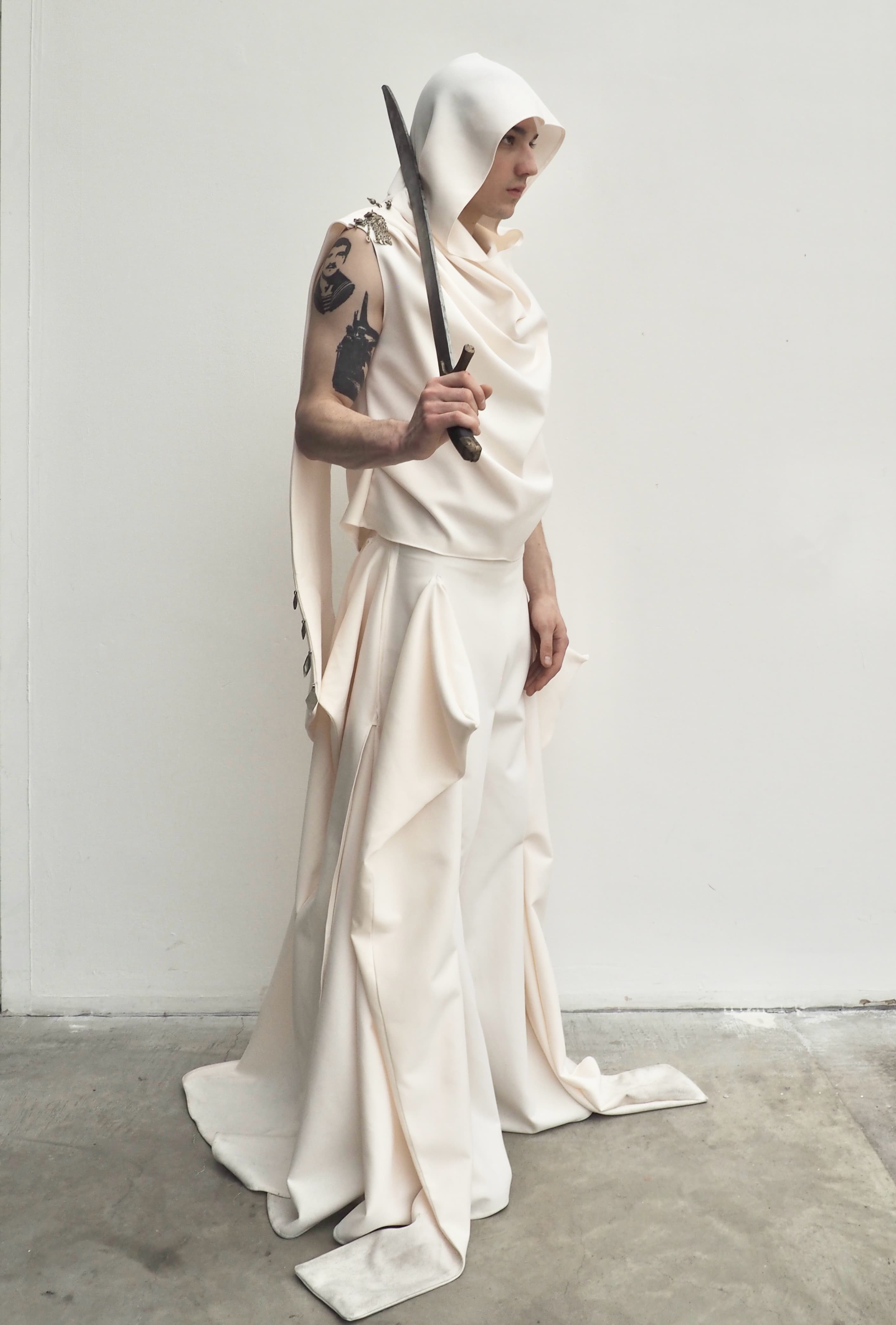
Pillings is one of my favourite brands, and I also worked there. Their knitwear is very considered in its construction, materials research, and concepts. My favourite look from them is from AW 2025, which merged hand knit with grey pilled knit. I love the way Murakami had the idea of merging different knits together through texture, colour, and shape. This is exactly what I want to make: designs that challenge typical knitwear norms.
Issey Miyake also makes sophisticated knitwear. In his collections from the 80s and 90s, he created knitwear with such inventive construction that, even as trends have faded, the designs continue to feel fresh and relevant. I think those are the kinds of design ideas that endure far into the future.
Motohiro Tanji is another Japanese knitwear designer I admire. His work is highly specialised in technique, using a variety of methods such as hand knitting, crochet, and knitting machines. I believe that there are still relatively few designers in the fashion industry who are successfully establishing themselves as knitwear brands with strong technical expertise. Nevertheless, I feel his work makes the most of knitwear’s expressive potential, and I hope to follow in his footsteps and further develop the knitwear industry.
Giorgio Fragiacomo
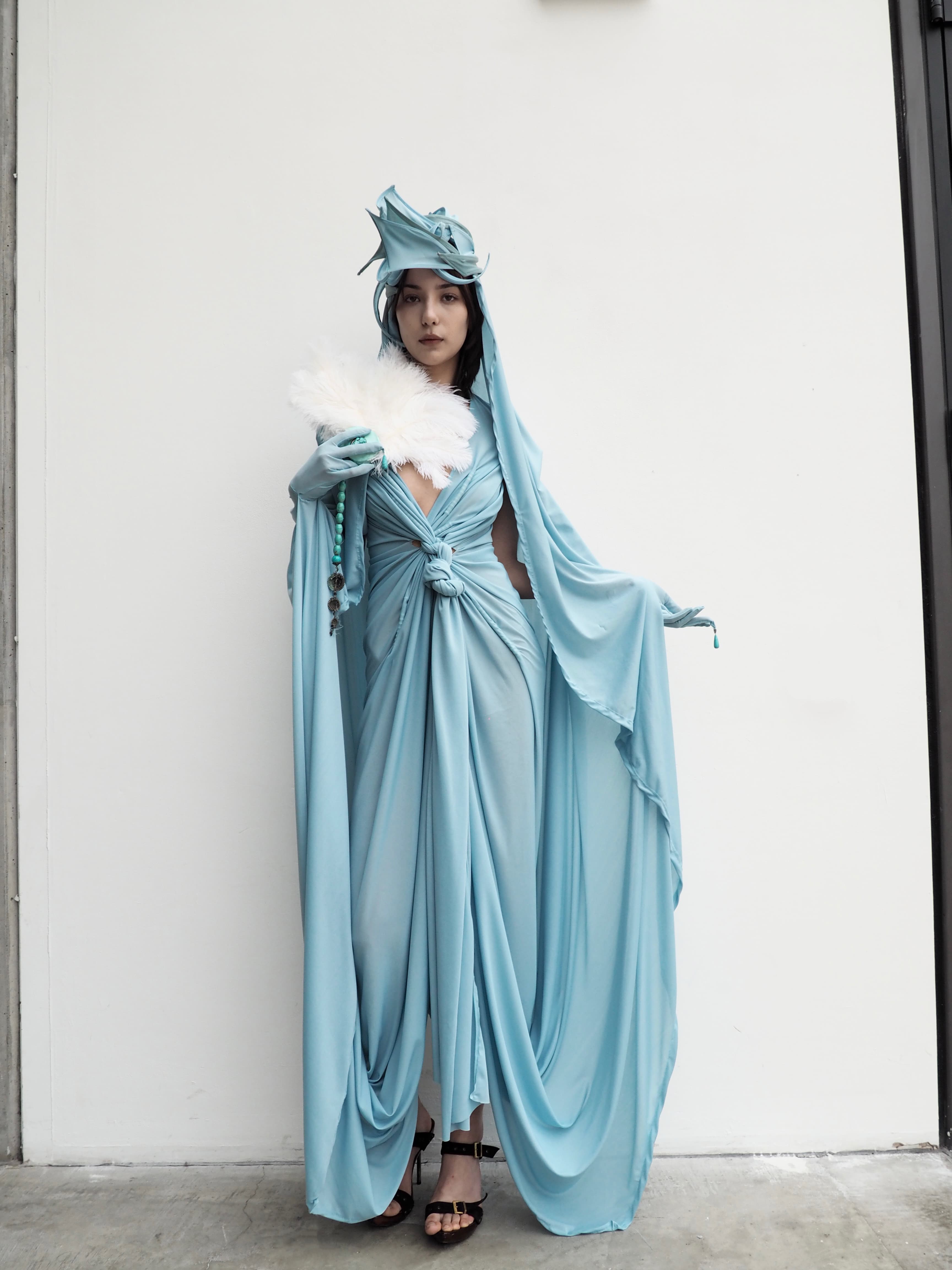
You’ve mentioned Iris van Herpen as a reference point. What is it about her work that impressed you?
Yurina Yoshii
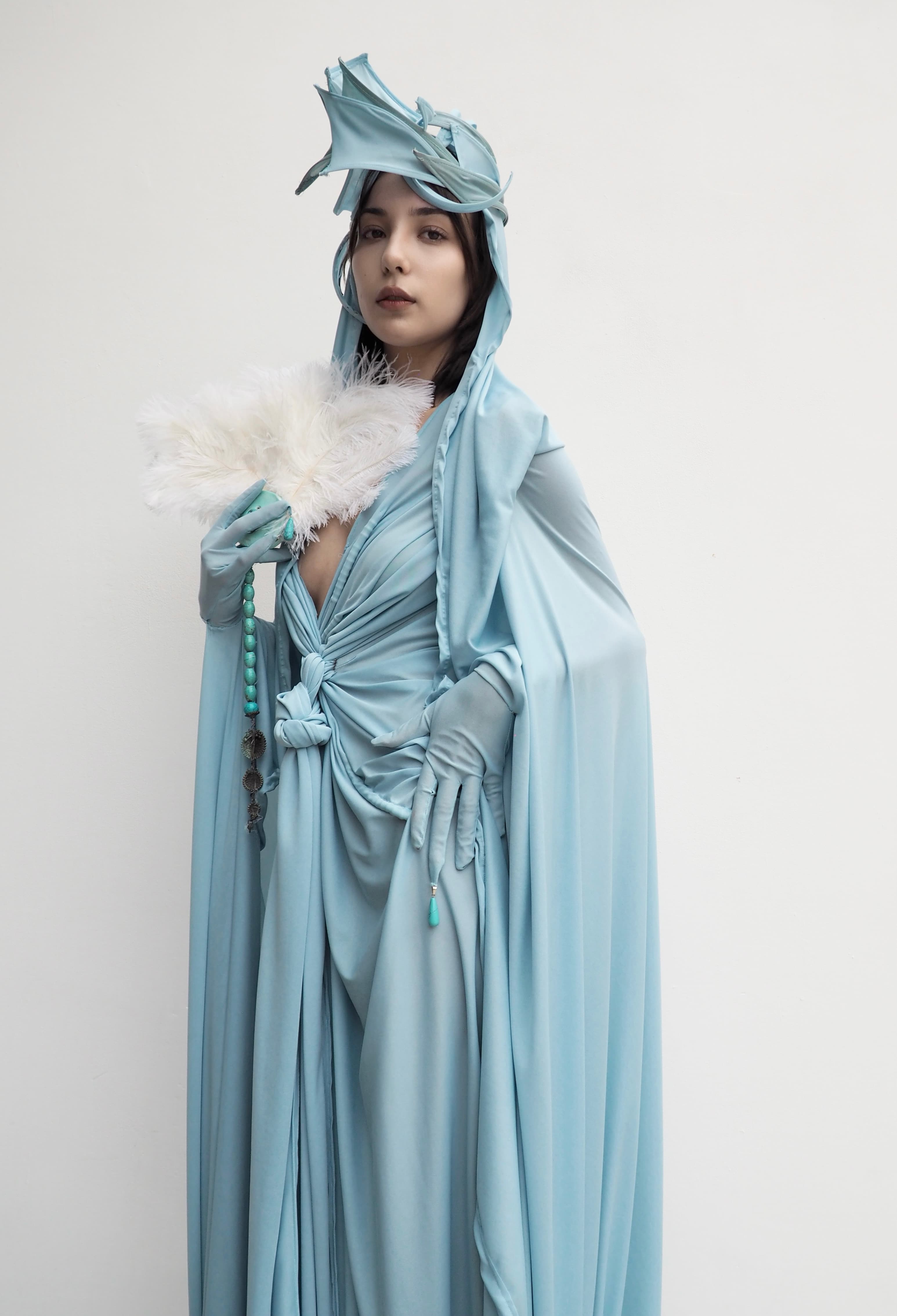
I always learn from her work what it means to create designs that leave a strong impression. I feel that all of her pieces are cutting edge, with silhouettes and materials that are incredibly unique. Her fashion design is not about practical clothing but rather about creating powerful, impactful art pieces. That unreal, almost otherworldly aesthetic is very inspiring, and every time I see her work, I feel energised.
Giorgio Fragiacomo
Can you walk me through the creative process behind the Ainu inspired garment? How did you move from the initial research into something wearable, and were there moments where the original reference had to be adapted or let go of?
Yurina Yoshii
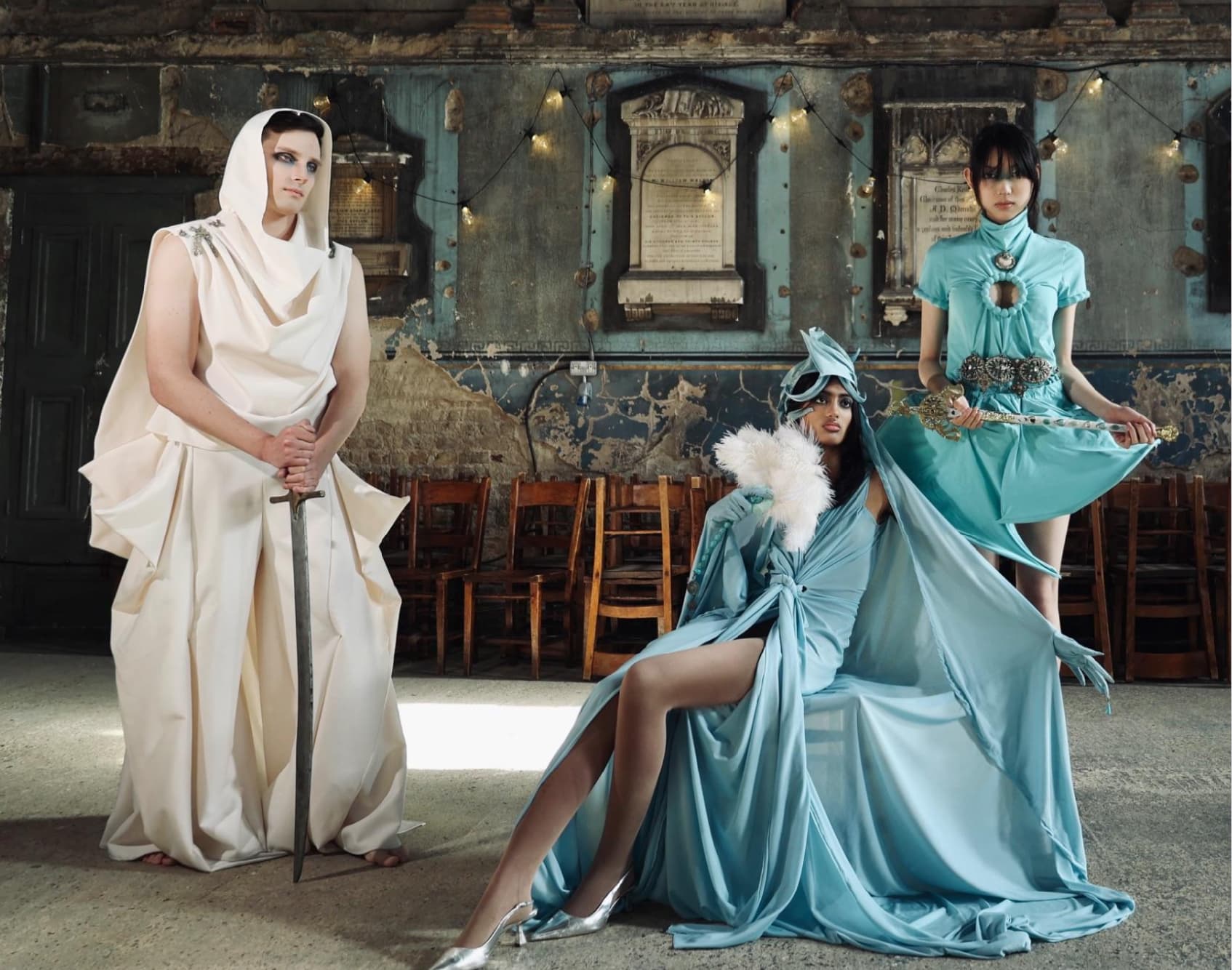
The project was called the Wool Project, and we were required to use 100% wool yarn and a Dubied machine, an industrial knitting machine. During the summer holiday, I travelled to Hakodate in Hokkaido, Japan, where I searched for inspiration for the project. Hokkaido is home to Ainu culture, the indigenous culture of Japan. I came across a museum by chance and decided to visit.
Ainu culture is not entirely Japanese; it is influenced by elements of Chinese and Russian cultures as well. Within this blend, I was particularly drawn to the traditional patterns, garments, and craftsmanship, which have a distinct character that differs from typical Japanese culture. I was especially inspired by the spiral motifs found in Ainu patterns, which are believed to ward off evil spirits, as well as by their use of colour. I was also influenced by the fact that the Ainu people traditionally incorporated animal fur into their garments due to their hunting lifestyle.
Based on these inspirations, I explored how to express these motifs through knitting, while also experimenting with ways to recreate textures similar to animal fur. After selecting several techniques during the sample making stage, I began designing. Initially, I aimed to express the beauty of the Ainu patterns to their fullest extent, planning to make the motifs highly intricate and three dimensional. I also intended to create a time consuming textile design using the Dubied machine for the back of the garment. However, due to time constraints, I had to simplify the design. Embracing the idea that “less is more,” I rebalanced the composition of the patterns and redesigned the piece.
The most challenging part was the actual making process. For this project, I used the fully fashioned knitwear technique on an industrial knitting machine for the first time. This required calculating each individual piece while knitting and simultaneously constructing the patterns during the process, making it a highly technical and demanding production method.
Giorgio Fragiacomo
You grew up in Tokyo and now you’re studying and living in London. When you look at your own work, what do you think comes from your Japanese background, and what has emerged specifically from being here?
Yurina Yoshii
I lived in Japan until middle school, and then moved to London on my own for high school. When I was in Japan, I had little interest in Japanese culture; if anything, I was only interested in foreign cultures. However, after coming to the UK and entering university, where I began interacting with people from all over the world, I found myself becoming much more interested in my own cultural background.
Being in such an international environment has helped me naturally accept everyone’s individuality. At the same time, I came to see my own identity and the Japanese culture I was born into as an important part of who I am, something I want to value and preserve.
This shift in perspective has also influenced my work, leading me to incorporate elements of Japanese culture into my designs. By doing so, I feel I am able to share the depth of Japanese culture with others around me, which I find very enjoyable and meaningful.
Giorgio Fragiacomo
I want to ask you something a bit more direct. After CSM, where do you see your future in fashion? Are you thinking about building your own label, working within a house, staying in London, going back to Japan, or is it still open?
Yurina Yoshii
After graduating from university, I do not yet have a concrete plan. However, I am certain that I want to stay in the fashion industry. Although it is a long term dream of mine to establish my own brand, I believe that what I truly need in the next few years is to gain as much experience, knowledge, and professional connections as possible, and I hope to build these wherever I can.
I have a strong ambition for knitwear. Although it may sound like a big dream, I want to further develop and expand the knitwear industry. I first encountered knitting in high school, and it made me realise that knitwear has endless possibilities. However, much of the knitwear we commonly see tends to look quite similar, and there are very few brands dedicated entirely to knitwear.
Even in everyday terms, yarn shops are surprisingly limited. For example, while London has many fabric shops and textile markets, there are only around ten yarn shops. Among them, only two or three sell yarn specifically for knitting machines. Although knitwear is something very familiar in everyday clothing, I find it frustrating that, from a maker’s perspective, it is still quite difficult to access the necessary resources.
For this reason, in the future, I hope to help make knitwear more accessible and widely appreciated, and to contribute to developing and improving the knitwear industry as a whole.
✦ ✦ ✦
Yurina Yoshii · Knitwear Designer
Interview by Giorgio Fragiacomo