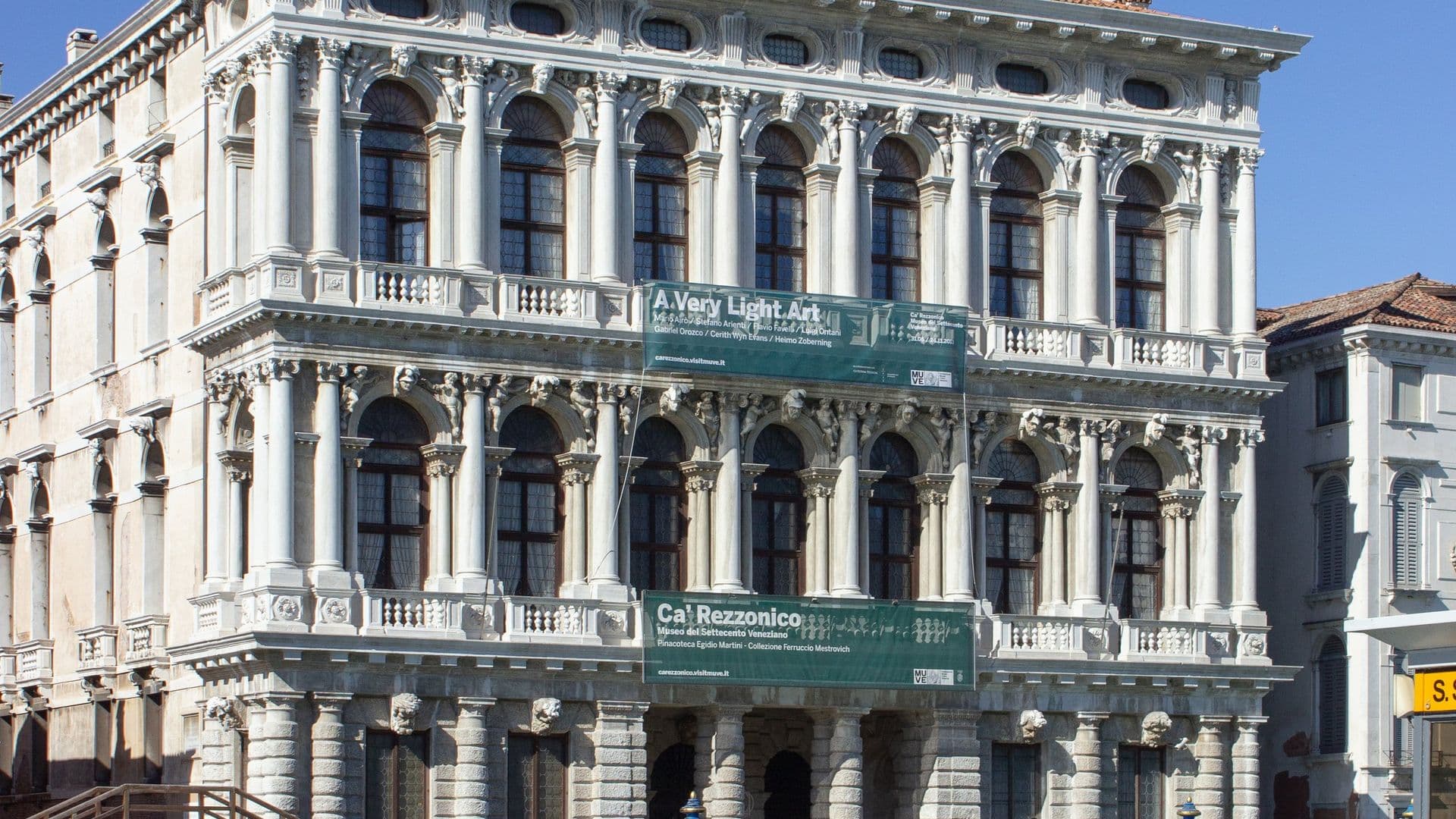
Ca' Rezzonico
Ca’ RezzonicoUseful InformationCa’ Rezzonico WebsiteOpening Time: closed nowCa’ Rezzonico Location on Google MapsCa' Rezzonico is a splendid palace on the Grand Canal built to a design by Baldassarre
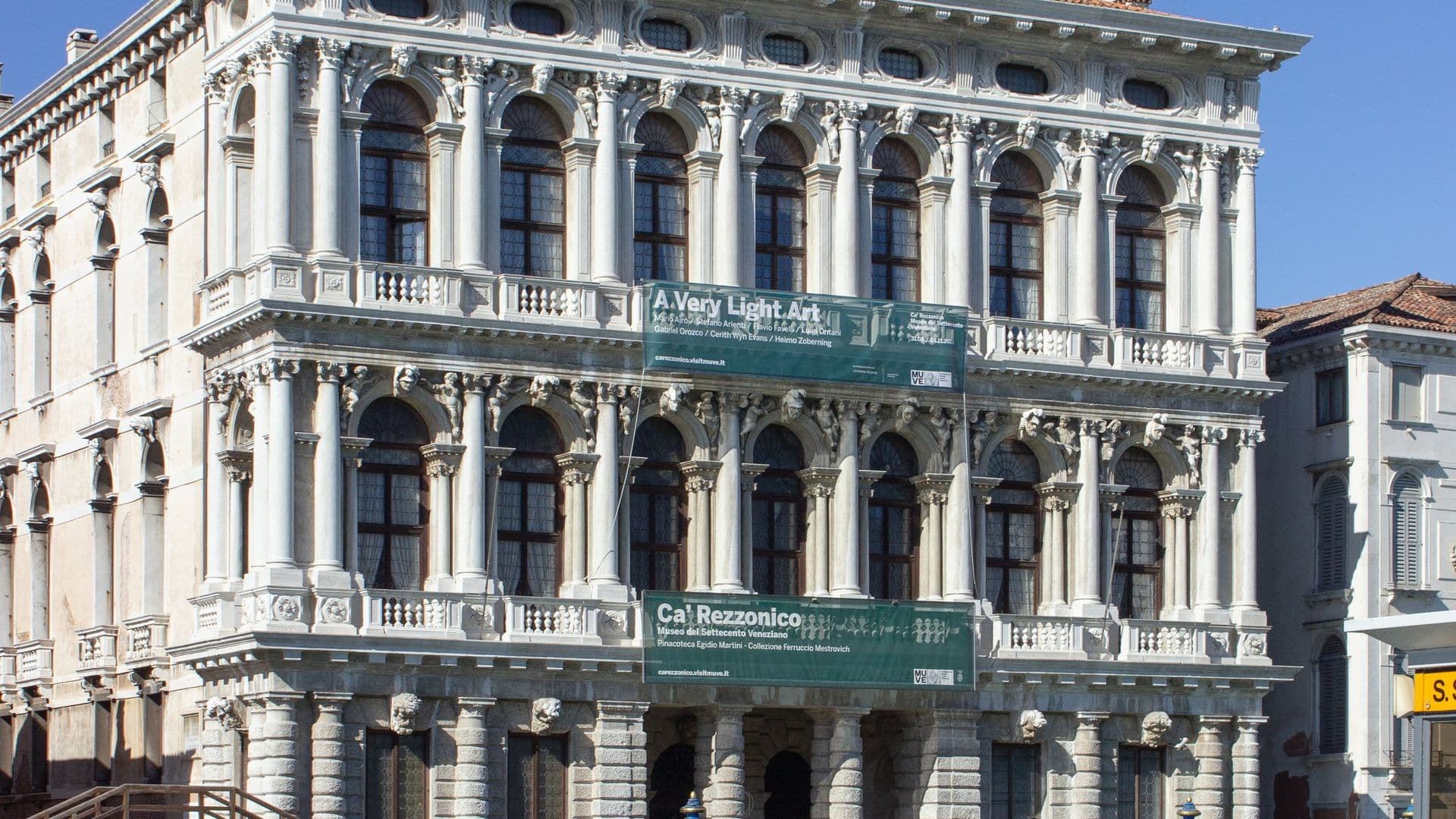
Ca' Rezzonico is a splendid palace on the Grand Canal built to a design by Baldassarre Longhena: since 1936 it has been home to the Museo del Settecento Veneziano.
Ca’ Rezzonico
Useful Information
Ca’ Rezzonico Website
Opening Time: closed now
Ca’ Rezzonico Location on Google Maps
The rich mansion, in addition to original frescoes by Giambattista Tiepolo and Giambattista Crosato, houses a valuable collection of 18th-century Venetian furnishings, paintings, and sculptures. These include paintings by Antonio Canaletto, Francesco Guardi, Giambattista Piazzetta, Rosalba Carriera, and Pietro Longhi, sculptures by Antonio Corradini, Andrea Brustolon, Filippo Parodi, and Giusto Le Court, as well as exuberant furnishings from the seventeenth and eighteenth centuries, flanked by a fine collection of porcelain, with examples from the most important Venetian and European manufactures of the eighteenth century.
On the second floor of the palace are the alcove, datable to the second half of the 1700s, from the Carminati palace in San Stae and the boudoir from the Calbo Crotta palace, whose walls still have the original 18th-century stuccoes, while the paintings are by Costantino Cedini.
Also on the second floor are the frescoes executed by Giandomenico Tiepolo in the family villa in Zianigo. Completed over a very long period of time, between 1759 and 1797, they undoubtedly constitute one of the most fascinating and singular moments of all Venetian painting. These are not works executed for a specific patron but for the pleasure of the artist himself and his relatives in the private dimension of his own home. The Stanza dei Pulcinella, the last one created, is perhaps the most famous of the entire cycle.
The third floor displays the pharmacy "ai Do San Marchi," which was located in Campo San Stin in Venice at the corner of Calle Donà. The pharmacy consists of three rooms, communicating with each other.
The first, the workshop proper, is set up with elegant dark walnut-root furniture and has decorated majolica vases on the shelves, intended to hold the spices and materials necessary for the making of medicines, the work of the Venetian Cozzi manufacture.
The second room is occupied by the laboratory, with a fireplace and stove, as well as alembics of the most varied shapes, made of the thinnest glass, which came out of the Murano furnaces. Finally, the third room is that of the retro-pharmacy with the walls completely covered with painted fir wood paneling. Also housed on the third floor is the Egidio Martini Picture Gallery, comprising paintings, almost all from the Venetian school, ranging from the 15th to the early 20th century, including works by Cima da Conegliano, Alvise Vivarini, Bonifacio de' Pitati, Tintoretto, Palma il Giovane, Bernardo Strozzi, Giulio Carpioni, Sebastiano Ricci, Rosalba Carriera, Giambattista Tiepolo, Ippolito Caffi, and Emma Ciardi to name but a few. The collection is an important reference point for scholars of seventeenth- and eighteenth-century Venetian painting.
The Browning Mezzanine, accessed from the first floor, also houses the Ferruccio Mestrovich collection with paintings by Jacopo Tintoretto, Bonifacio de' Pitati, Francesco Guardi, Sebastiano Ricci, and Alessandro Longhi.
The ground floor, around the entrance hall, houses visitor services: information, ticket office, checkroom, toilets, bookshop, cafeteria, and elevator. The large garden features a parterre with boxwood beds with a wisteria-covered pergola and is also arranged to accommodate small theatrical performances.